
EDITORIAL: THE WINTER OF RETURN
By early December, a gentler sun and misty mornings settled over Santiniketan, turning the red earth softer underfoot and the evenings sharper with the smell of smoke and gur. Building on a November filled with workshops, film screenings, and a revival of cultural tourism, the town moved into its most anticipated stretch of the year: the weeks of Nandan Mela, Poush Utsav, and Poush Mela.
This has also been a winter of return—of former students revisiting their old paths through the ashram, of artisans reclaiming their stalls after lean years, and of music once again spilling out from Khoai and the melas late into the night.
NOVEMBER TO DECEMBER: A CONTINUING FESTIVAL SEASON
The cultural momentum from November rolled seamlessly into December.
Events at Arthshila, the renewed presence of visitors inside the Visva-Bharati campus, and the strong weekend turnouts at Sonajhuri Haat set the stage for a December defined by art fairs and year-end gatherings.
-
The anticipation built through November’s film screenings and workshops created a ready audience for December’s art and craft festivals, especially among younger visitors and students.
-
Local livelihoods that saw a boost after campus reopening in October continued to benefit from the extended festive season, particularly rickshaw pullers, homestay owners, and handicraft sellers.
1. NANDAN MELA: ART IN THE WINTER LIGHT
Early December in Santiniketan once again belonged to Nandan Mela, the much-loved art fair organized by the students and faculty of Kala Bhavana.
Spread across the campus courtyards, the mela brought together affordable art, experimental works, and everyday utility items in a way that only Santiniketan can.
-
Stalls showcased prints, sketches, hand-painted bookmarks, ceramics, batik, terracotta, and small sculptures, making it possible for visitors to carry home a piece of the institute’s creative spirit without prohibitive prices.
-
Many student groups used their stalls to raise funds for future projects, while some experimented with eco-friendly displays—recycled materials for signboards, cloth instead of plastic for packaging, and hand-painted banners.
-
The walkways turned into informal performance spaces, with impromptu music, poetry readings, and adda stretching well into the winter evenings.
2. POUSH UTSAV & POUSH MELA: SONGS ON THE DUST
As December advanced, preparations for Poush Utsav and Poush Mela began to dominate the town’s rhythm. The fair, tentatively announced earlier to begin on December 23, 2025 (7th Poush), became the focal point for both residents and visitors.
-
The traditional Brahmo prayers marking Poush Utsav brought together students, teachers, alumni, and visitors in the ashram area, underlined by Tagore’s emphasis on simplicity and community.
-
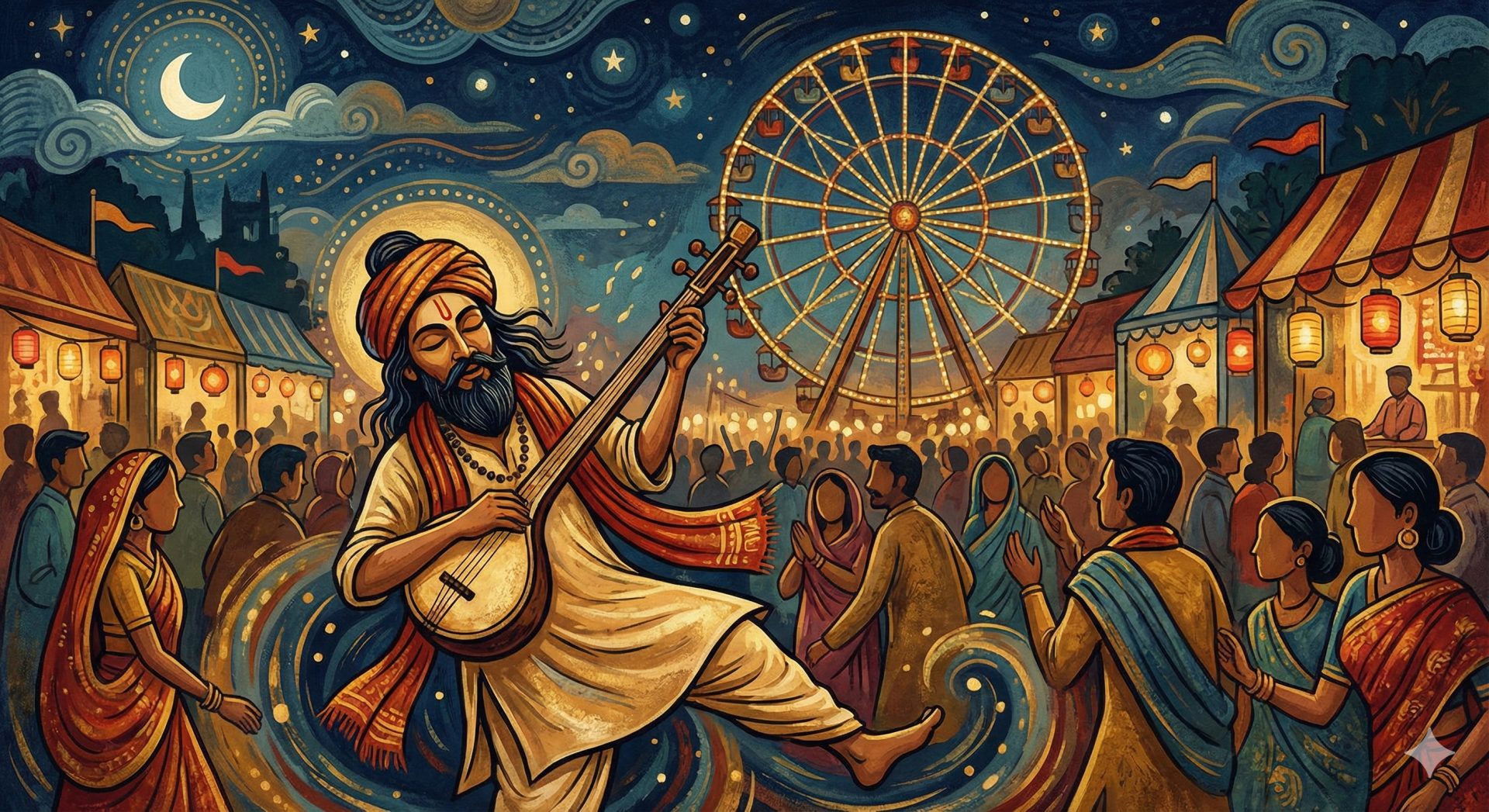
Once the gates of Poush Mela opened, the grounds filled with Baul singers, kirtan groups, folk troupes, and a wide range of stalls selling batik, dokra, Kantha work, handloom textiles, wooden toys, and terracotta.
-
Evenings saw the familiar glow of festive lights, the smell of jilipi, momo, and ghugni, and the sound of dotara and ektara weaving through the crowd, as people from across Bengal arrived to experience the fair.
Local administration and Santiniketan-based bodies worked together to manage crowd movement, safety, and cleanliness, extending the traffic-control measures already visible in November near busy junctions.
The emphasis on a more organized layout, clear walking paths, and basic amenities hinted at a model of Poush Mela that respects both tradition and the town’s changed infrastructure after the UNESCO recognition.
3. SONAJHURI HAAT & WINTER TOURISM
Parallel to the melas, weekends at Sonajhuri Haat and the Khoai region remained vibrant throughout December. The cooler weather and school vacations brought a steady stream of tourists from Kolkata and beyond.
-
Baul songs, folk performances, and impromptu dance circles continued to draw large crowds, with visitors often splitting their time between the haat in the day and mela grounds in the evening.
-
Stalls selling Kantha-stitch shawls, woollens, leather goods, dokra jewelry, and bamboo crafts did brisk business, building on the record footfall already reported in November.
-
Traffic volunteers and local transport providers broadened their coverage around Shyambati and nearby crossings on peak days, helping keep the flow manageable despite the surge.
4. CAMPUS, CULTURE, AND QUIET CORNERS
Beyond the fairs and crowds, December also held quieter cultural and spiritual moments across Santiniketan.
-
Cultural centers such as Arthshila Santiniketan continued to host screenings, talks, and workshops, adding a reflective layer to a month otherwise dominated by open-air celebrations.
-
Study circles, small addas on Tagore’s works, and informal music sessions in ashram-adjacent spaces reminded residents that Santiniketan’s core identity lies as much in contemplation as in celebration.
On December 25, the Upasana Griha (Prayer Hall) hosted its traditional Christmastide service, an event that blends Brahmo prayer with the spirit of Christmas in a uniquely Santiniketan way, as already anticipated in the November bulletin.
The illuminated glass structure, framed by the winter night sky, offered a moment of calm after the bustle of the mela grounds.
LOOKING AHEAD: JANUARY 2026
With the conclusion of Poush Mela and the close of the calendar year, Santiniketan now turns toward a new academic term and the festivals of early spring.
-
January is expected to focus on post-mela clean-up, restoration of open spaces, and the resumption of regular academic rhythms inside Visva-Bharati, after weeks of intensive visitor activity.
-
Preparations for Maghotsav, Saraswati Puja, and upcoming exhibitions at Kala Bhavana will soon begin, promising a softer, more introspective cultural calendar after the intensity of December.
Stay tuned for our early 2026 updates as Santiniketan moves from the songs of winter into the colours of spring.